
InVault use case
RFID tool tracking for tool cribs, forklifts and MHE
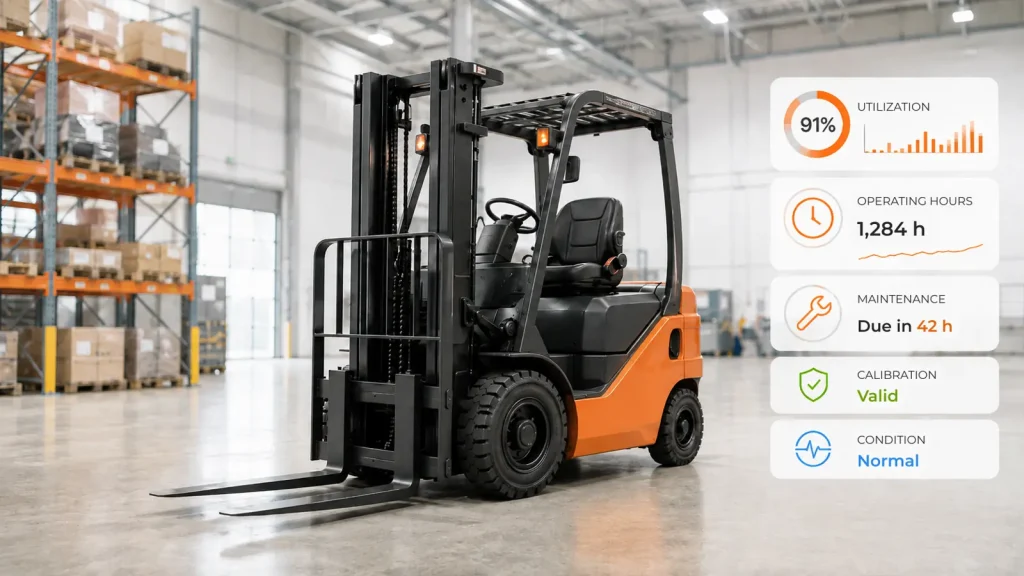
InVault does RFID tool tracking for hand and power tools, toolboxes, calibrated instruments and tool cribs, and adds UWB or GPS for forklifts, AGVs, yard tractors and service trucks. You see who checked out each tool, where every vehicle is, and which equipment is due for calibration or sitting idle.
The problem
Missing tools stop work. Untracked vehicles hide capacity.
A technician needs a torque wrench that is “in the crib somewhere”. A tool left inside an assembly after maintenance becomes foreign object debris. A multimeter gets used past its calibration date because nobody saw it was overdue.
Forklifts, AGVs and yard tractors spread across buildings and yards. Without location and utilization data you can’t tell whether you need two more trucks or just better use of the ones you have.
- MRO & hand tools
- Hand and power tools, toolboxes and kits, items issued from a tool crib
- Calibrated tools
- Multimeters, oscilloscopes and other instruments with calibration due dates
- Material-handling equipment
- Forklifts, AGVs and yard tractors
- Vehicles
- Service trucks and shuttle vehicles, indoors and outdoors
What changes
What RFID tool tracking changes on the floor
- Self-service check-out and check-in at a Visium Station or smart tool crib, so every tool is tied to a named person
- Toolbox and kit assembly and audits that confirm nothing was left behind after a job, which is the heart of foreign object debris (FOD) prevention
- A missing tool found with the Geiger locate mode on a handheld, and forklifts, AGVs and yard vehicles shown on one indoor and outdoor map with utilization and idle time
- Calibration due and overdue alerts tied to the physical instrument, with history ready for QA
Stockroom inventories that used to take days drop to minutes when handhelds read RFID and barcodes in one pass. InThing has delivered RAIN RFID tool management for a rail manufacturer.
How it works
Capture, understand, act.
- CaptureRugged on-metal RFID tags go on tools and toolboxes, readers sit at crib doors and kiosks, and vehicles and MHE carry UWB, Bluetooth LE or GPS tags.
- UnderstandTrapeze turns reads into check-outs, returns, locations and movements, and relates them to users, zones and maintenance schedules.
- ActVisium Station handles self-service check-out and kit audits, Visium Mobile handles locating and auditing, and Visium Web shows calibration, utilization and idle-time reports.
Two jobs, one system
From the tool crib to the yard.
Tool crib management
Tools and kits are enrolled once: the kiosk encodes and prints the RFID label. After that, technicians check tools out and back in themselves, the crib knows its own inventory, and a toolbox audit takes seconds instead of a clipboard walk. Bulk enrollment and toolbox configurations are handled in Visium Mobile.
Forklift and MHE tracking
UWB gives forklifts and AGVs a precise indoor position, Bluetooth LE gives zone presence for mobile equipment, and GPS or LoRaWAN covers yard tractors and service trucks. You get utilization, idle time and service due dates per vehicle, so fleet decisions rest on real hours.
Calibrated instruments
Meters, gauges and scopes carry their calibration schedule with them. The system flags due and overdue instruments and keeps the calibration history that quality auditors ask for.
Workflows this use case improves
Part of the InVault asset lifecycle.
Reservations & checkouts
Tools and equipment booked, issued and returned, with custody recorded.
Workflow details
Location & inventory
Live inventory of cribs and toolboxes, and vehicle positions by zone.
Workflow details
Maintenance & calibration
Due dates, overdue alerts and service history per tool and vehicle.
Workflow details
Budget & spend management
Right-size the fleet and stop re-buying tools you already own.
Workflow details
Asset audits & compliance
Toolbox audits and end-to-end trails for FOD and quality programs.
Workflow details
Alerts & reports
Exceptions surface themselves.
- Tool not returned
- Kit incomplete
- Calibration due / overdue
- Unauthorized movement
- Asset idle time
- Heat maps of MHE use
Technology fit
The right sensor for each tool and vehicle.
- UHF RFIDOn-metal tags built for oil, dirt and chemicals, read at crib doors, at kiosks and during toolbox audits.
- Barcode & NFCLow-cost identity for small hand tools and tap-to-confirm handoffs.
- Bluetooth LEZone presence for shared power tools and mobile equipment.
- UWBPrecise real-time position for forklifts, AGVs and other MHE indoors.
- GPS & LoRaWANYard tractors, service trucks and shuttle vehicles outdoors.
Proof, measured on your site
How an RFID tool tracking pilot is measured
Tools and vehicles behave differently on every site, so the most useful proof is your own numbers. A pilot is set up to produce them.
- BaselineBefore any tags go on, we record today’s numbers: hours lost searching, tools replaced per quarter, how long a crib or toolbox audit takes, forklift hours you think you use.
- Pilot weeksOne crib, one line or one group of vehicles is tagged and running for a few weeks, on the hardware you would buy for the rollout.
- What we measureAudit time, tools not returned, calibration overdue, search time, and actual forklift utilization and idle time.
- DecisionYou compare pilot numbers with the baseline and decide whether to roll out, change the setup or stop.
By vertical
Where tool and MHE tracking matters most.
Manufacturing & Logistics
Tool cribs, line-side tools, forklifts, AGVs and yard tractors.
Manufacturing & Logistics
Government & Education
Fleet vehicles, maintenance tools and equipment under periodic audit.
Government & Education
Questions buyers ask
Tool and MHE tracking FAQ
Can RFID tags survive on metal tools?
Yes, with the right tag. Small on-metal tags suit hand tools and larger rugged tags suit power tools and mobile equipment. Epoxy or heat-shrink tubing protects them against oil, dirt and chemicals. Test the tag and the attachment on your own tools before rollout. Read our tool-tracking webinar summary.
Do we need a staffed tool crib?
Not necessarily. Visium Station kiosks handle self-service check-out and check-in, kit assembly and audits, and smart tool cribs. They also encode and print RFID labels when new tools are enrolled.
Can tools and forklifts live in the same system?
Yes. InVault uses RFID for tools and UWB, Bluetooth LE or GPS for vehicles, all on one platform. EAI-Bridge publishes locations, check-outs and maintenance events into SAP, Oracle, ServiceNow, IBM Maximo and similar systems.
Related reading
More on tool and asset tracking
-
Lab note
Visium AI: ask your operation anything, in plain English
“Where was forklift 01 last seen?” Visium AI answers from your live data, respects every permission and changes nothing without your approval.…
-
Blog
SLED Asset Accountability: How to Replace Manual Audit Chaos With Continuous Assurance
Annual hallway audits can’t keep up anymore. Learn how SLED teams borrow continuous assurance from finance and catch asset issues in week…
-
Blog
What Is Asset Intelligence and How Is It Different from Asset Tracking?
Asset tracking tells you where something is. Asset intelligence tells you what is happening around it, why it matters, and what to…
Part of InVault
One asset tracking application for every asset class.
Plant tools and MHE is one of four InVault use cases, alongside capital assets and equipment, returnable items, and documents and textbooks. All four run on the same InThing platform.
- Related use cases
- Capital assets & equipment · Returnable items
- Platform
- Trapeze · Visium · EAI-Bridge
Find your missing tools
Bring your tool crib and your fleet.
We’ll look at how tools and vehicles move today, which tags and readers suit your environment, and what a first pilot could measure.